
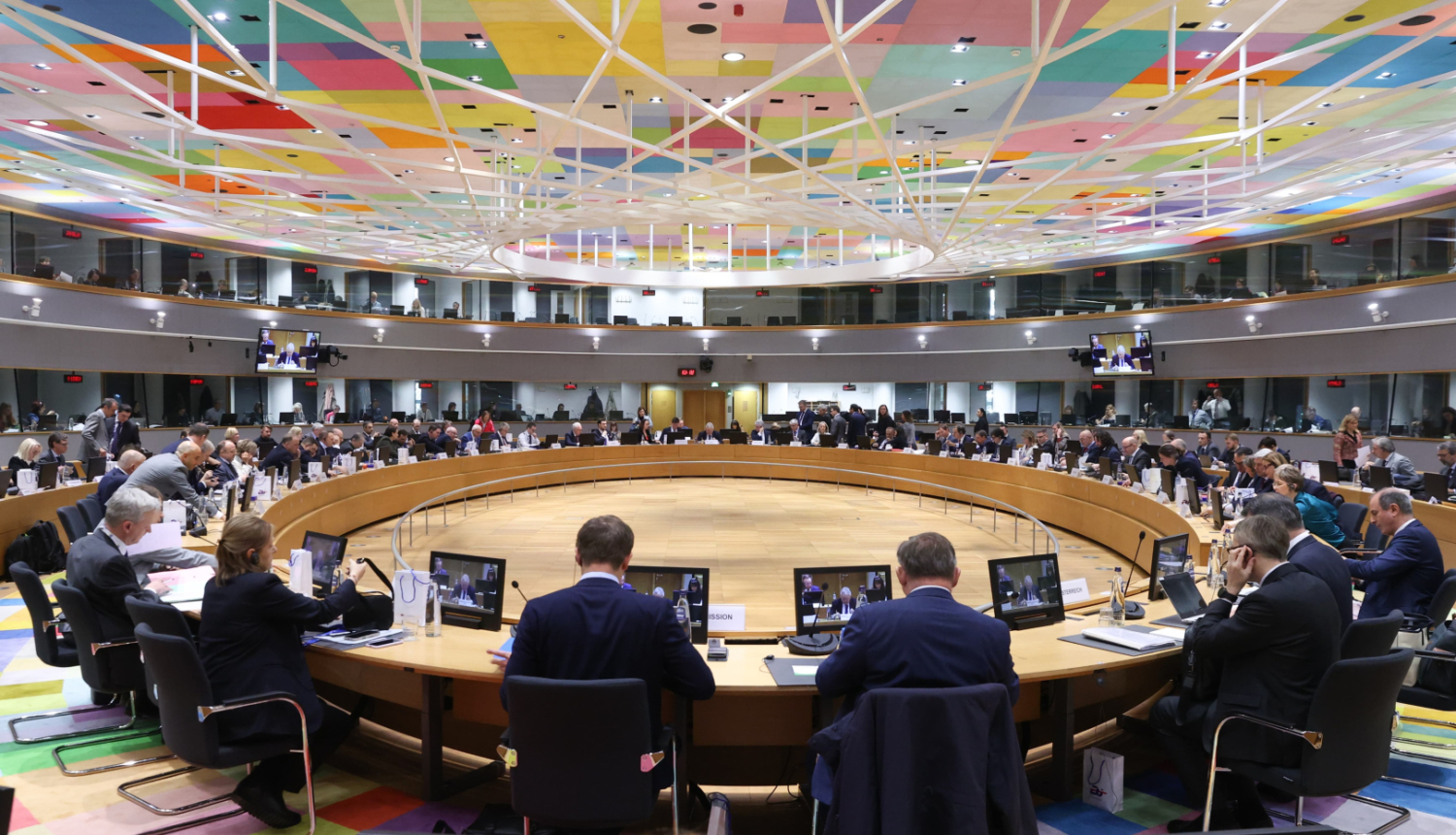
On Monday, January 26th, at the EU Agriculture and Fisheries Council in Brussels (Belgium) Member States will exchange views on the EU Bioeconomy Strategy published by the European Commission (EC), which sets out a framework for a competitive and sustainable EU bioeconomy. The EU Council will also discuss proposed amendments to EU legislation on organic farming production, labelling, certification and trade with third countries. Latvia will be represented at the EU Council by the State Secretary of the Ministry for Agriculture, Ģirts Krūmiņš.
The Cyprus Presidency of the EU Council aims to ascertain Member States’ views on how best to strengthen the role of agriculture, fisheries and forestry in the EU bioeconomy and the national economy. The opinions of Member States are important for the preparation of the Council’s conclusions on the EU Bioeconomy Strategy, which are planned to be approved at the EU Environment Council in March this year.
The EU Bioeconomy Strategy has four main pillars: increasing innovation and investment, developing markets for bio-based materials and technologies, ensuring a sustainable supply of biomass, and making use of global opportunities. The bioeconomy, as an area of economic activity, is based on the sustainable use of biological resources—goods, services, knowledge and technologies in agriculture, forestry and fisheries, biomass processing, bio-manufacturing and biotechnology—in food production and in health, industry and ecosystem services.
The EC has also published a proposal for amendments to EU rules on organic farming production, labelling, certification and trade with third countries, aimed at simplifying the import of organic products while maintaining the EU’s strict organic production standards. At the Council meeting, Member States will discuss the EC proposal, which provides for clearer import labelling requirements, increased trust in the EU organic logo on products from third countries, support for operators by reducing the administrative burden on businesses, and preparing the sector for the future by creating a more flexible framework for investment.
On Tuesday, January 27th, the State Secretary of the Ministry for Agriculture, Ģirts Krūmiņš, will take part in a high-level discussion held by the EC’s Director-General for Agriculture and Rural Development, Elisabeth Werner, on the future regulatory framework of the Common Agricultural Policy (CAP) for 2028–2034, which is currently one of the most important topics. State secretaries of EU Member States will discuss the preparation of CAP-related aspects (planned as part of the National and Regional Partnership Plan),while also focusing on the upcoming EC recommendations to Member States on the CAP.
On Tuesday, Ģirts Krūmiņš is also scheduled to meet with Aloysio Nunes Ferreira, Head of European Strategic Affairs at the Brazilian Trade and Investment Promotion Agency (ApexBrasil), to discuss possible cooperation in agriculture and fisheries, including trade, as well as opportunities to promote contacts between entrepreneurs.