


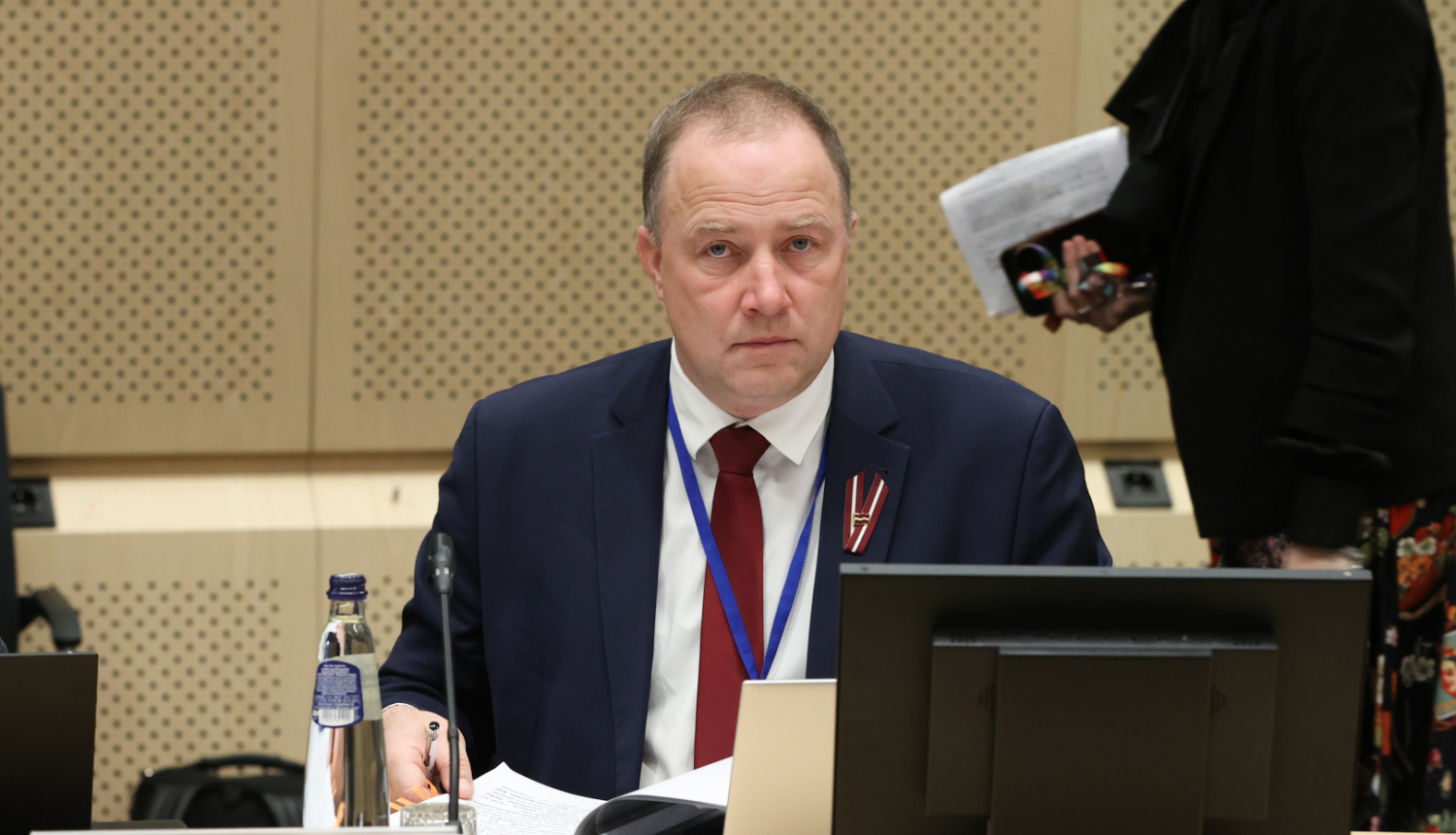
On Tuesday, January 27th, the State Secretary of the Ministry of Agriculture, Ģirts Krūmiņš, participated in a high-level discussion organised by the European Commission’s Director-General for Agriculture and Rural Development, Elisabeth Werner, on the future regulatory framework of the Common Agricultural Policy (CAP) for 2028–2034, currently one of the most important issues on the agenda. The State Secretaries of the EU Member States discussed preparations related to the CAP, also focusing on the forthcoming European Commission recommendations for Member States concerning the CAP.
The Common Agricultural Policy is intended to be incorporated into the Single National and Regional Partnership Plan (NRPP), which is planned to be introduced in the next planning period.
State Secretary Ģirts Krūmiņš: “Under the new programming approach, the strategic importance of the Common Agricultural Policy is not being duly recognised. Latvia does not agree with this and insists that post-2027 the agricultural policy must remain a separate, targeted European Union policy with appropriate funding.”
According to Latvia, the content of the NRPP currently proposed by the European Commission is overly detailed, particularly the section relating to the CAP. It is complex and risks creating additional bureaucracy. Existing experience should be taken into account and reliance placed on already established institutions, without creating new coordinating structures. It is also crucial to receive, as early as possible, the documents necessary for preparing the NRPP, such as guidelines and policy frameworks. This is important to ensure that Member States can review the documents in a timely manner and engage in a well-considered dialogue with the Commission, allowing sufficient time to listen to one another and find the best solutions for supporting various priorities and policy areas. The CAP must not suffer from this.
The State Secretaries also discussed the European Commission’s Vision for Agriculture and Food presented last year, assessing progress towards the objective of a strong agricultural sector with a predictable and sustainable future.
State Secretary Ģirts Krūmiņš: “However, when looking at the expected changes in the next planning period, there is no certainty that agriculture will continue to retain strategic and priority importance within the EU. If agriculture is to remain a cornerstone of our national security, it requires adequate and stable financial support at EU level — for all Member States. Unfortunately, the planned CAP funding per hectare clearly shows that the allocation for Latvia will be the lowest in the entire EU — only seventy-four percent of the EU average. That is a step backwards.”
At the same time, countries bordering aggressor states such as Russia and Belarus face distinct defence and security priorities. Therefore, farmers in these countries, including Latvia, require targeted and reinforced support to withstand the prolonged socio-economic pressure caused by their proximity of the aggresors and their aggression directed against Europe as a whole.