


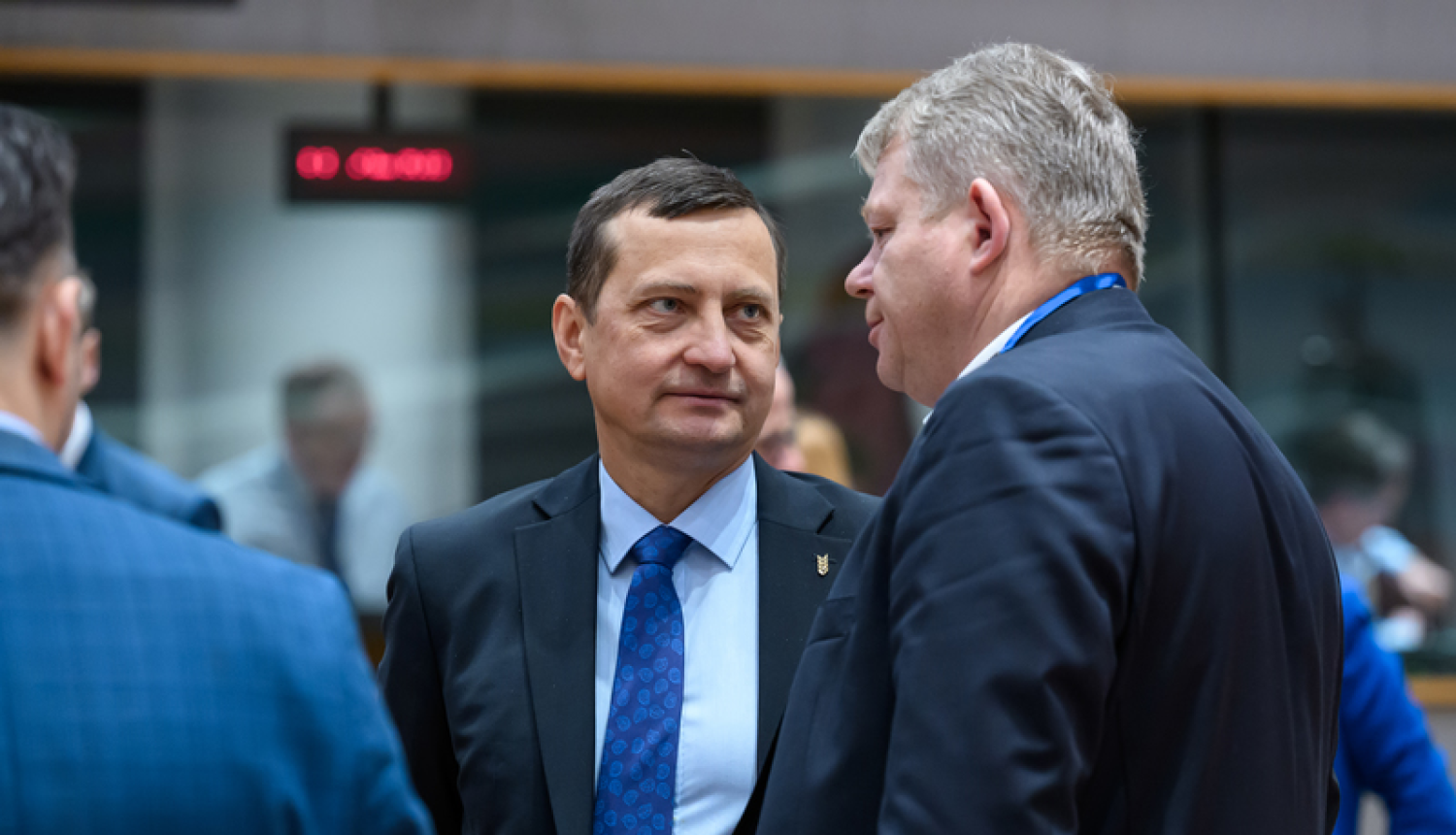
On Monday, February 23rd, Minister for Agriculture Armands Krauze participated in the meeting of the EU Agriculture and Fisheries Council in Brussels, Belgium, where Member States discussed the future of the Common Agricultural Policy (CAP) post-2027. The meeting also examined the issue proposed by Latvia regarding the simplification of controls and audits related to the implementation of CAP measures.
Ministers discussed the European Commission’s proposal to introduce country-specific recommendations within the CAP framework for the post-2027 period. These recommendations would serve as an important EU policy steering mechanism to ensure a level playing field among Member States.
During the meeting, Minister for Agriculture Armands Krauze stressed that CAP recommendations must remain advisory rather than binding in nature and should take into account the specific situation of each Member State and the funding available. The Minister also recalled that no political agreement has yet been reached on the structure of the Multiannual Financial Framework, while the current vision of the European Commission already foresees that the majority of CAP measures would be mandatory. In the context of reduced funding, there is a risk that Member States may not have sufficient resources to implement all recommendations.
At the meeting, Latvia also called on the European Commission to review the scope, deadlines and proportionality of guidelines and methodological requirements in order to ensure that controls and audits related to the implementation of CAP Strategic Plan measures in the current planning period are aligned with simplification objectives rather than creating a risk of financial corrections. Latvia’s initiative was supported by 22 other Member States, demonstrating a shared understanding across the EU of the need to reduce the administrative burden.
Minister Armands Krauze emphasised: “CAP controls and audits must be implemented in a proportionate and balanced manner, ensuring timely and practical support for Member States in the quality implementation of measures. In conformity clearance procedures, a consultative and system-improvement-oriented approach should be applied, as the application of new and complex systems and the introduction of new schemes objectively increase the risk of non-compliance. I am pleased that this issue has received broad resonance among Member States and that the European Commission has shown readiness to engage in dialogue with the parties involved to seek solutions. We must not only work on simplifying the current system, but also ensure that the lessons learned are applied in the future and that no additional bureaucratic burden is created.”
Latvia will continue to actively advocate for a CAP implementation model that ensures sound financial management while significantly reducing the administrative burden for authorities and farmers.