
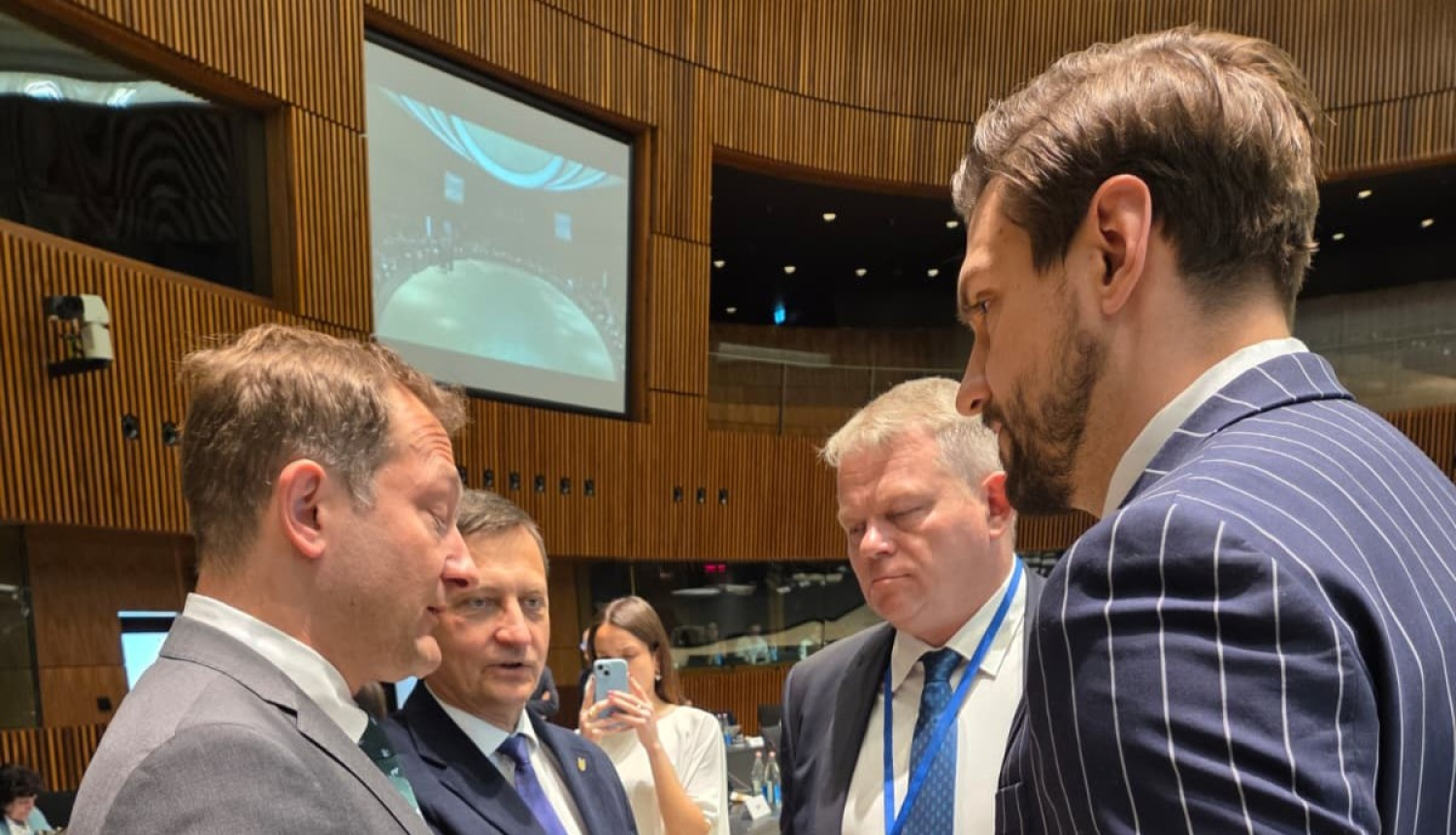
On Monday, April 27th, at the meeting of the EU Agriculture and Fisheries Council in Luxembourg, ministers discussed the European Commission’s (EC) proposal for income support under the Common Agricultural Policy (CAP) after 2027. Minister for Agriculture Armands Krauze stressed that the first priority must be to ensure a fair distribution of CAP support among Member States by completing the convergence of direct payments. The current system of direct payments still allows significant disparities, distorting competition in the EU single market.
Ministers also discussed various restrictions proposed by the EC for area-based income support in the next planning period. Among other measures, the proposal would introduce a cap of EUR 100,000 per farm per year and take farmers’ income into account when calculating support. The Minister for Agriculture stressed that neither capping nor the gradual reduction of support for larger farms should be mandatory for all Member States without first assessing the impact in each country and taking account of its specific circumstances.
The EC also plans to target future area-based income support at specific groups of farmers, such as young farmers and women. In addition, average minimum and maximum levels of support per hectare would be established. According to the EC, the new system is intended to improve the targeting and more balanced distribution of support, while contributing to broader EU objectives such as generational shift, food security and balanced agricultural development.
“Of particular importance to Latvia is ensuring that EU direct payments are better targeted at active farmers who produce food, earn their income from farming and are directly exposed to income fluctuations and market risks. Both the European Commission and Member States must finally agree that support should be targeted on the basis of common and fair principles, while providing sufficient flexibility in implementing measures to reflect the circumstances of each Member State,” Minister for Agriculture Armands Krauze said during the discussion.
The Council also discussed the current situation in agriculture and agricultural markets, which is particularly critical in Latvia’s arable crop and vegetable sectors. The sharp increase in the cost of mineral fertilisers and fuel coincides with the intensive spring farming season. At the same time there are also concerns about the availability and affordability of mineral fertilisers in the second half of the year. Farmers have already suffered considerably from various crises in recent years, and further increases in production costs are no longer sustainable. The current situation requires targeted action by the EC. The Minister for Agriculture called on the EC to implement swift and decisive solutions that would provide immediate support to primary producers, including compensation for the sharp rise in mineral fertiliser prices.
At the Council meeting, Latvia and Finland jointly initiated a discussion on the role of peat in achieving food security, sustainable forestry and regional development objectives. It was emphasised that peat is a strategically important resource in Northern Europe, particularly in the Baltic States and Scandinavia, especially as a source of growing media for horticulture and forest planting material. At present, there are no other safe, cost-effective and European-produced alternatives available for these purposes. Latvia stressed the need for a gradual, balanced and science-based EU approach to peat use policy that takes account of the different circumstances of Member States and the latest scientific evidence. Latvia also called for stronger EU-level cooperation in research and innovation to support well-founded policy decisions.