


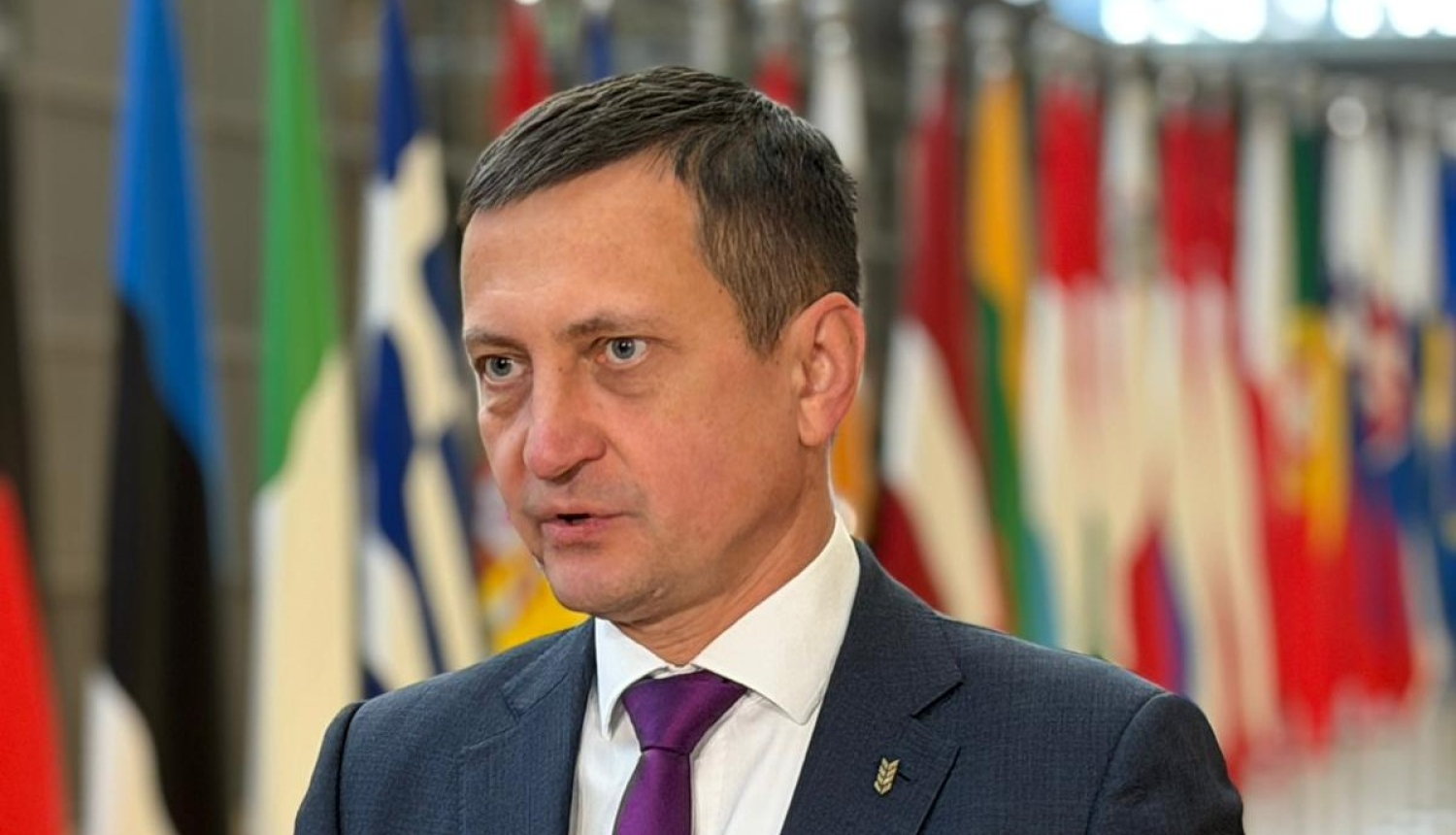
Minister for Agriculture Armands Krauze participated in the EU Agriculture and Fisheries Council meeting in Brussels (Belgium) on Thursday and Friday, December 11-12th, where ministers discussed the promotion of innovation and the simplification of the Common Agricultural Policy (CAP) post- 2027.
During discussions on fostering innovation and introducing new technologies in agriculture after 2027, the Minister for Agriculture noted that conditions must be purposefully designed so that innovations and technologies become part of farmers’ everyday practice. This can be achieved by allocating CAP funding to support instruments such as knowledge dissemination, advisory services, research and innovation, which would help farms introduce precision agriculture tools and digital technologies.
Minister for Agriculture Armands Krauze stated:“One of the most effective solutions is linking payment conditions to specific technologies or practices. This approach is already applied in eco-schemes and ensures targeted support and a clear connection between requirements and results. At the same time, advisory networks and practical assistance must be strengthened, which is particularly important for small and medium-sized agricultural holdings, as well as knowledge transfer and cooperation between science and entrepreneurs.”
Unfortunately, no CAP funding is earmarked for these important—and in some cases mandatory—measures; Member States must finance them themselves, despite differing priorities and budgetary capacities. According to the Minister, this is not appropriate, as it does not provide clarity for the sector regarding the future and increases unequal competition among Member States. From 2028, Latvia is expected to receive the lowest average CAP support per hectare among EU Member States—only 74% of the EU average level. A. Krauze stressed that conditions must be fair and that Latvia should receive at least 90% of the EU average level of CAP support.
The new single financing model proposed by the European Commission (EC)—the National and Regional Partnership (NRP) plan and fund, which would also include the CAP—is completely contrary to the CAP simplification process already under way. The new model would require additional coordinating structures, new layers of bureaucracy, and increased costs for adapting IT systems. This would complicate and make the current situation more expensive rather than simplify it, the Minister for Agriculture concluded.