


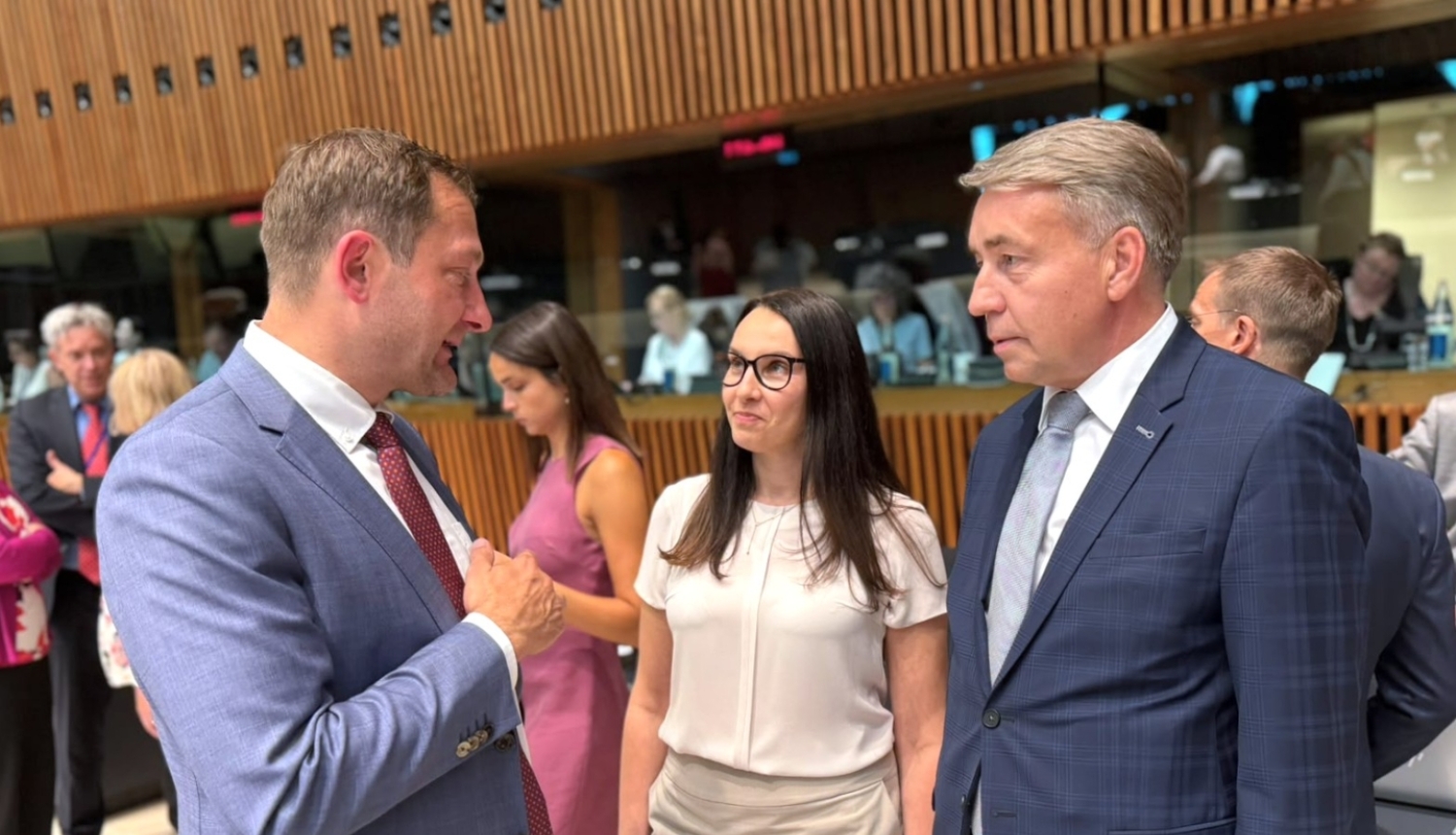
On June 22nd and 23rd, Minister for Agriculture Uldis Augulis participated in the meeting of the EU Agriculture and Fisheries Council in Luxembourg, where Member States discussed sustainable fishing in the EU, the evaluation of the Common Fisheries Policy (CFP), the situation in agricultural markets and the future of the Common Agricultural Policy (CAP) post-2027.
During the discussion on sustainable fishing in the EU and fishing opportunities for 2027, the Minister stressed that decisions must be based on scientific data while also taking full account of the socioeconomic impact on the fisheries sector. Latvia also reiterated its concerns about the difficult state of the Baltic Sea ecosystem and the additional risks to Baltic fish stocks posed by Russia fishing at levels that do not comply with scientific advice.
Discussing the evaluation of the Common Fisheries Policy, Minister for Agriculture Uldis Augulis stressed the need to develop a vision for the EU fisheries and aquaculture sector up to 2040 as soon as possible. Future policy planning must also provide sufficient funding to address the sector’s challenges, take socioeconomic factors into account and reduce the administrative and financial burden on businesses operating in the fisheries sector.
Uldis Augulis also raised the issue of the fisheries agreement between the EU and Mauritania. The agreement and the fishing opportunities it provides in Mauritanian waters are very important for Latvia’s long-distance fishing fleet, providing Latvian fishers with access to important fishing resources and supporting the sector’s competitiveness. The Minister called on the European Commission (EC) to make every effort to finalize the new agreement, taking into account the interests of the EU, including Latvia. He also stressed the need to consider the specific requirements of each Member State and the needs of their fisheries sectors in order to achieve a balanced and mutually beneficial outcome.
“It is essential for Latvia that EU policy ensures both the sustainable management of resources and the viability of the sector. Decisions in fisheries must be based on science, but they must not ignore the needs of people and businesses that depend on the sector for their livelihoods and contribute to socioeconomic activity in coastal areas. In agriculture, swift, targeted and fair action is now needed at EU level to ease the pressure on farms from significantly increased production costs,” emphasised Minister for Agriculture Uldis Augulis.
Discussing the challenges facing agriculture, Uldis Augulis drew attention to rising input costs, particularly the impact of mineral fertiliser, fuel and electricity prices on farms. Given the decline in farms’ financial resilience in recent years, the current increase in costs requires more targeted action by the EC. At the same time, the Minister cautioned against relying too heavily on national budget funding to support the sector, as differences in Member States’ budgetary capacity could further increase inequalities across the EU. Latvia therefore called for discussions on EU emergency support to compensate for rising costs, stressing that the mechanism for distributing support must be fair and based on Member States’ actual dependence on mineral fertilisers rather than the level of direct payments.
In the debate on the CAP post-2027, the Minister stressed that the CAP must remain a strong common EU policy with shared objectives, common basic rules, a level playing field and stable, predictable funding. The new CAP should be simpler, clearer and easier to implement, while providing Member States with greater flexibility in selecting and implementing support measures according to national and regional needs.