


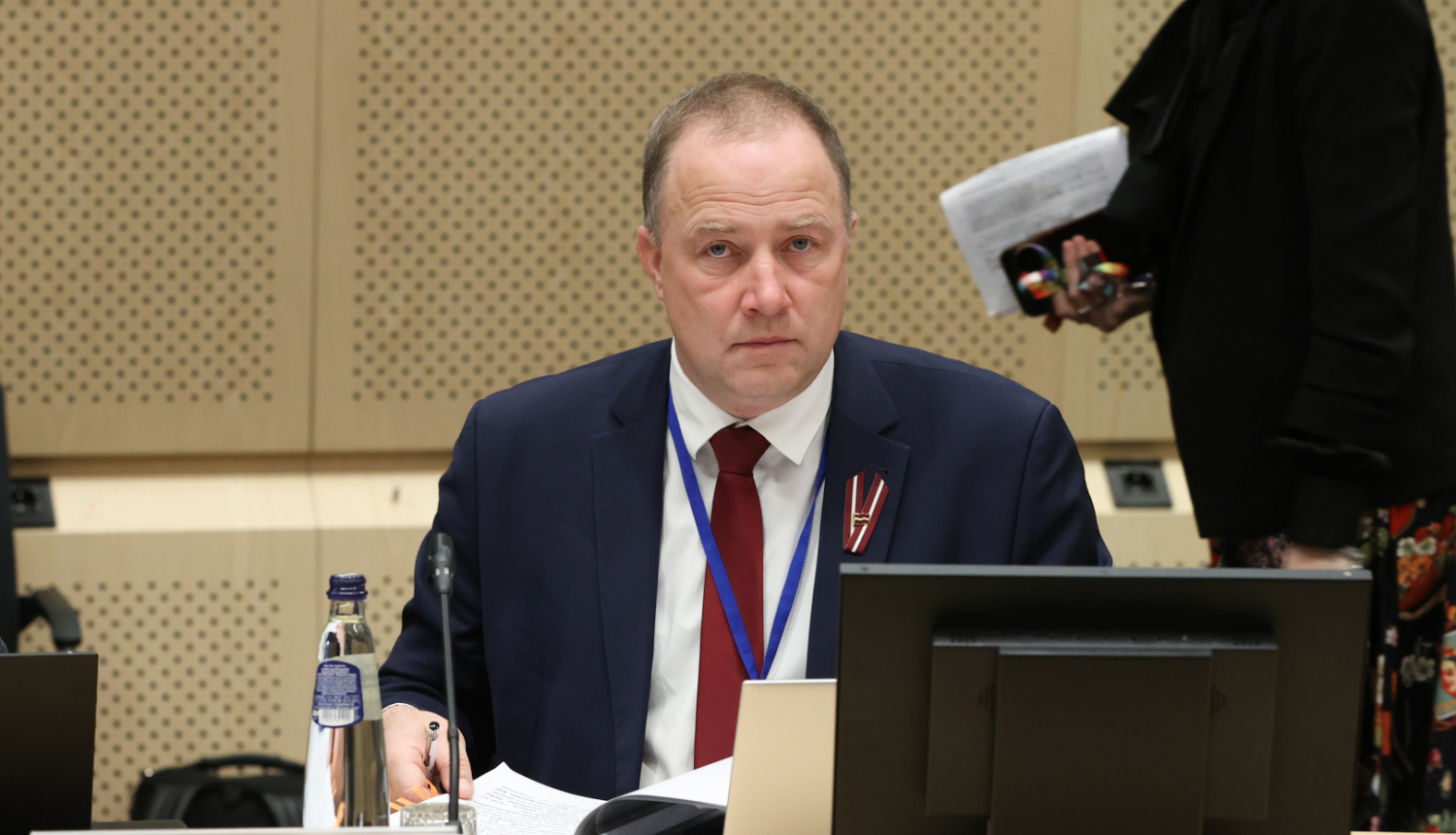
State Secretary of the Ministry of Agriculture Ģirts Krūmiņš today participated in a high-level discussion in Brussels, Belgium, organised by the European Commission’s Directorate-General for Agriculture and Rural Development. Participants discussed the simplification of controls and audits related to the implementation of the Common Agricultural Policy (CAP). During the discussion, Latvia once again raised the need to significantly reduce the administrative burden on Member States and ensure a more proportionate approach to CAP controls and audits.
The discussion follows Latvia’s initiative launched in February at the EU Agriculture and Fisheries Council and later reinforced in a joint letter from Member States to the European Commission. Today, the need to simplify controls and audits was supported by almost all EU Member States.
At the meeting, the State Secretary of the Ministry of Agriculture emphasised that functioning CAP governance and control systems are already in place in Member States. At the same time the current audit approach of the European Commission creates an artificial risk of non-compliance and a disproportionate administrative burden for both farmers and the responsible authorities.
State Secretary of the Ministry of Agriculture Ģirts Krūmiņš: “Currently, the risk of non-compliance for Member States is so high that, in order to meet the requirements set by the European Commission, they are forced to increase the number of controls and the level of bureaucracy for farmers. As a result, farmers’ attitude towards EU support instruments and their supervision is becoming increasingly negative. Often, the audit approach is not proportionate – requirements are interpreted separate from the reality, and the objective circumstances affecting their fulfilment are not sufficiently taken into account. We must be certain that every new requirement is truly necessary and achieves its intended objective. This is the moment when we must all work together to find solutions that strengthen the competitiveness of the sector rather than hinder it.”
At the discussion, Latvia emphasised the need to set the permissible level of non-compliance at the fund level rather than separately for each support measure, as well as to ensure that Member States, before receiving sanctions, are first given the opportunity to implement corrective measures. It is also essential to ensure that new guideline requirements are applied only from the next financial year and that the single audit approach is strengthened by relying more on the work of certifying bodies.