
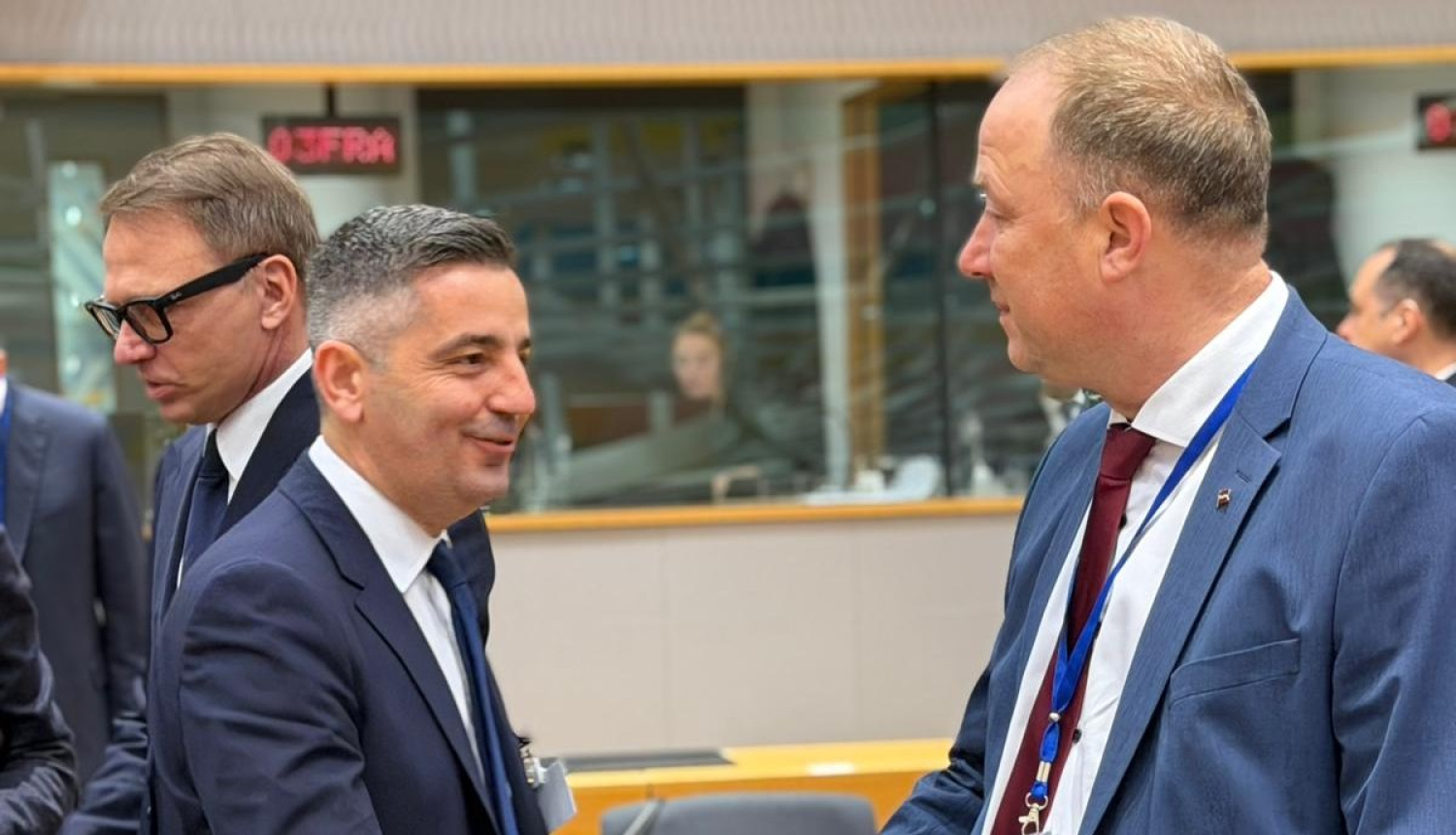
On Monday, January 26th, the State Secretary of the Ministry of Agriculture, Ģirts Krūmiņš, participated in the EU Agriculture and Fisheries Council in Brussels (Belgium), where Member States discussed the European Commission’s (EC) published EU Bioeconomy Strategy and the proposal for amendments to EU regulations on organic production, labelling, certification, and trade with third countries.
The main objectives set out in the EU Bioeconomy Strategy aim to strengthen the EU’s competitiveness by promoting the market entry of new innovative products and replacing fossil resources with biological ones, which is particularly important in the current geopolitical context. The implementation of the strategy envisages promoting and supporting the use of natural materials such as wood in construction products, wider use of bio-based fertilisers and plant protection products, as well as the use of natural fibres characteristic to Latvia—such as flax fibre, hemp fibre and wool—in the creation of innovative products.
State Secretary of the Ministry of Agriculture Ģirts Krūmiņš: “The bioeconomy is highly important for economic growth, while at the same time serving as a driver for research, innovation and job creation. It requires well-designed programmes for modern education and training, as well as sufficient funding both for increasing primary productivity and for introducing technological processes. All of this requires substantial long-term financing, as these capital investments have a very long payback period. Therefore, it is important to provide support for this objective within the future Multiannual Financial Framework, as well as the Common Agricultural Policy.”
Addressing the Member States, the State Secretary noted that the implementation of the Bioeconomy Strategy would provide a good opportunity for agricultural, forestry and food sector entrepreneurs to diversify their income. At the same time, support for product processing is not foreseen in the future CAP framework. However, farmers and foresters play a significant role in supplying biomass, which also creates added value. It is crucial to rely on local resources—for example, in forestry, on the wood resources available in Latvia. Consideration must be given to how to invest in and increase forest productivity. Appropriate financing instruments must be adapted, cooperation must be strengthened, and the administrative burden reduced. Additional administrative burden must not be imposed through new criteria and certification systems. These should be based on already existing sustainability practices and criteria, while taking into account the specific situation of each Member State, as well as climatic and geopolitical challenges.
At the Council meeting, Member States also discussed the EC proposal for clearer import labelling requirements, aimed at simplifying rules and ensuring the trade of imported organic products within EU Member States. Latvia generally supports the EC proposals to reduce bureaucracy; however, caution is needed to ensure that new requirements do not create additional administrative burdens in the field of control.